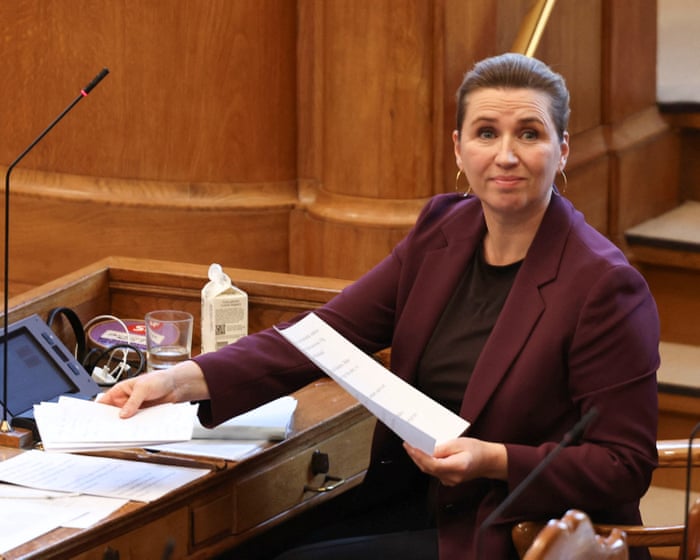
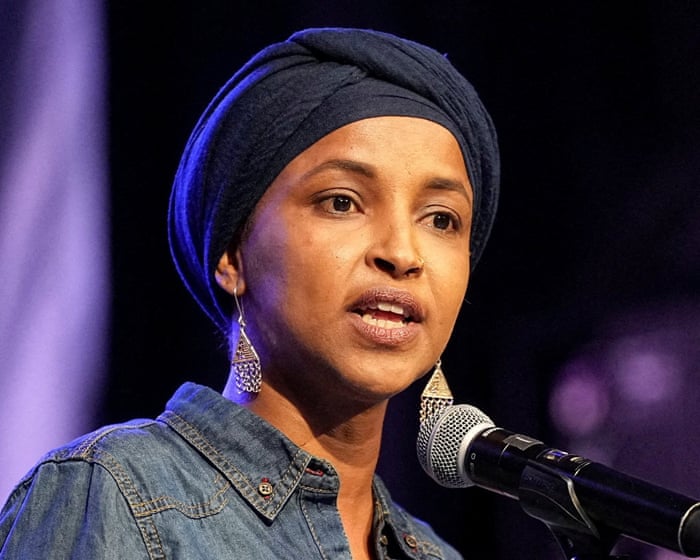
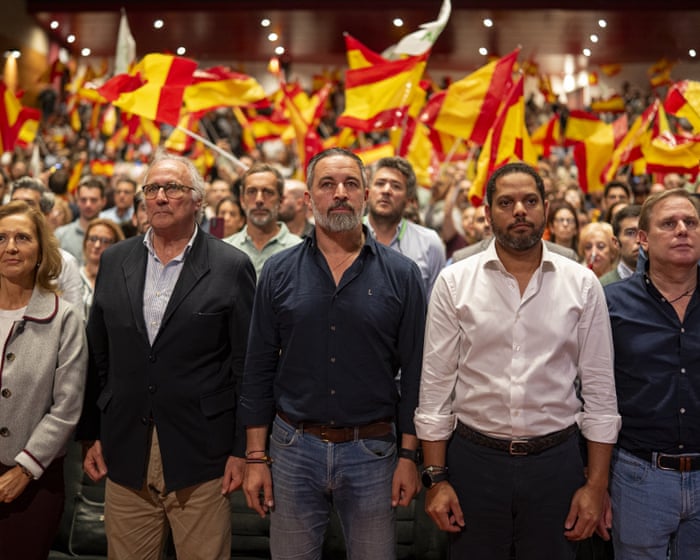
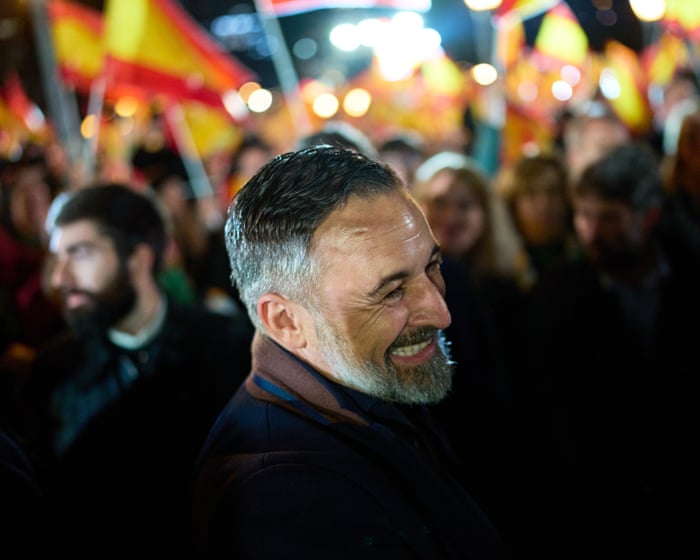
Santiago Abascal’s party has adopted radical ideas from France and beyond. If it joins a PP coalition, it would be a morale boost for allies across the continent It was a scene few would have imagined possible in Spanish politics until recently. Flanked on stage by Catalan flags, the far-right Vox leader, Santiago Abascal, addressed a packed campaign rally in Girona, where he promised “to defend Catalan identity” against supposed “Islamisation”. He urged his audience to confront what he claimed was “the primary challenge” of a new “caliphate” across Spain. For a fringe party that made its breakthrough in 2018 by demonising Catalonia’s independence movement, it was a striking change of emphasis, reflecting a strategic shift that has brought Vox to the brink of power. When the results of this Sunday’s snap general election become clear, there is a strong likelihood that centre-left PM Pedro Sánchez will be forced out, with Vox as kingmakers and junior coalition partners to the traditionally dominant rightwing People’s party (PP). The perpetually dour Abascal may lack the charisma of Trump or Italy’s Giorgia Meloni, but Vox is projected to increase its vote share from 12.4% in 2023 to close to 20%. It has achieved this surge not by moderating its rhetoric as it draws closer to power, but by embracing some of the most radical positions on immigration from across the European far right. A place in government for the party could, in turn, embolden its allies across Europe, as France, Italy and Poland prepare to go to the polls next year. Continue reading...
Why all of Europe should be watching as Spain’s far-right Vox closes in on power | Eoghan Gilmartin
The Guardian – International · By Eoghan Gilmartin
Published ·
Keep reading
Related stories