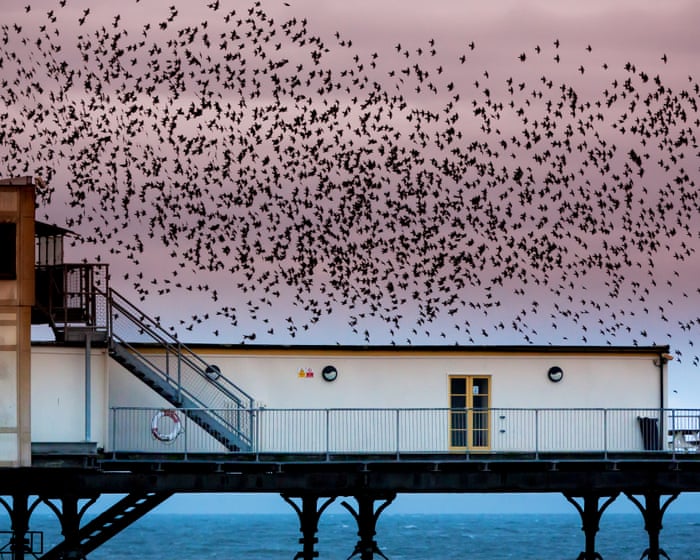
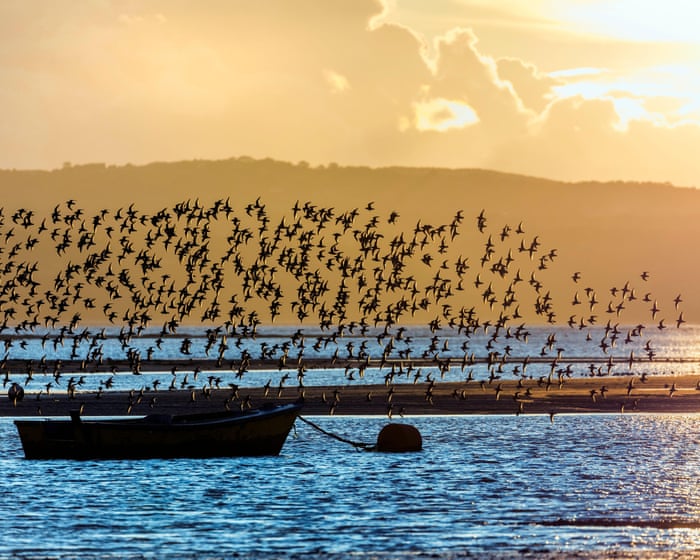
Once a hive of maritime activity, the estuary is now a haven for wildlife – but you don’t have to be a birder to appreciate its tousled beauty Cheshire’s Hadlow Road is a fine railway station. A redbrick building with a cream signal box and a spick-and-span platform, it has neat benches, potted flowers, and a cafe that serves a restorative flat white. But the metal billboards fixed to the brickwork – advertising, among other things, Lever’s Cattle Cakes and Hudson’s Super Soap – are evidence of what really makes the station notable: the last train came through in 1962. “Nearly 65 years ago,” confirms the man repainting the signal box. I sip my coffee and stare along the line. Plenty has changed in this corner of the country since Hadlow Road’s heyday. The rural station is now a preserved heritage attraction, but for almost 100 years it was a stop on a branch line of the Birkenhead Railway. From its westbound platform, passengers and cargo would rumble out towards the coastal town of West Kirby. The trackbed, long since greened over, is now the Wirral Way, a tree-lined path for walkers and cyclists that stretches along the remarkable Dee estuary. Continue reading...
Walking the Wirral Way: winter birdwatching and coastal history on the Dee estuary
The Guardian – International · By Ben Lerwill
Published ·
Keep reading
Related stories