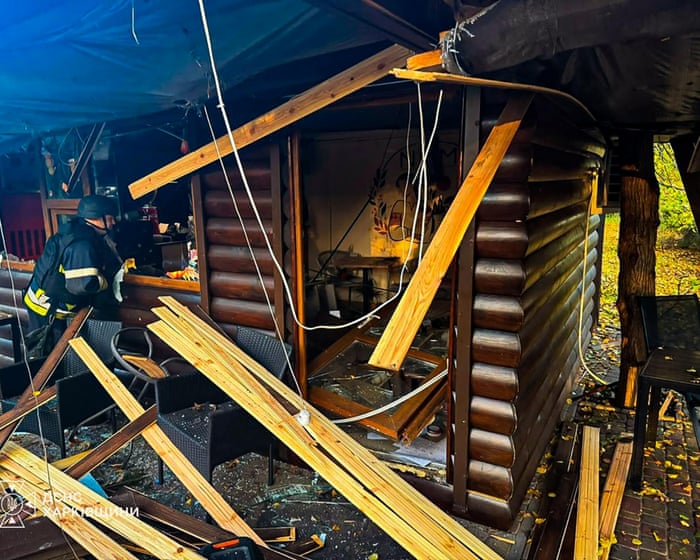
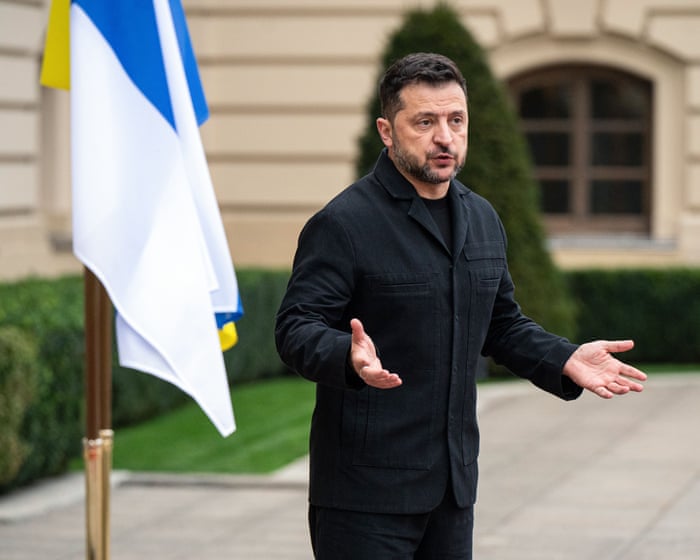
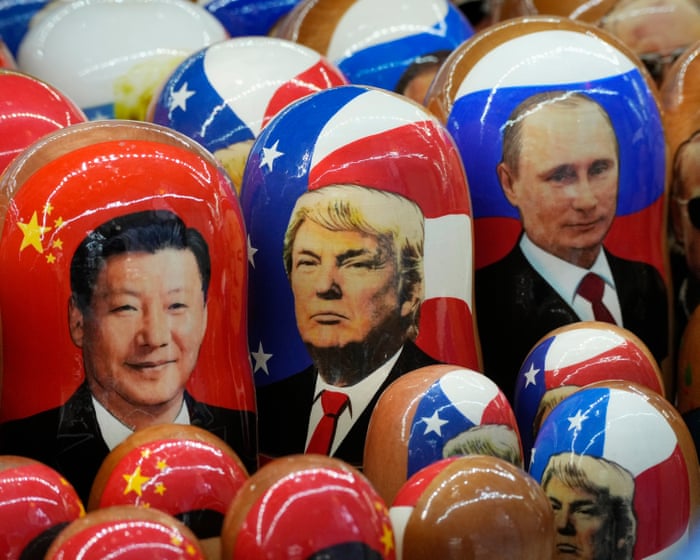
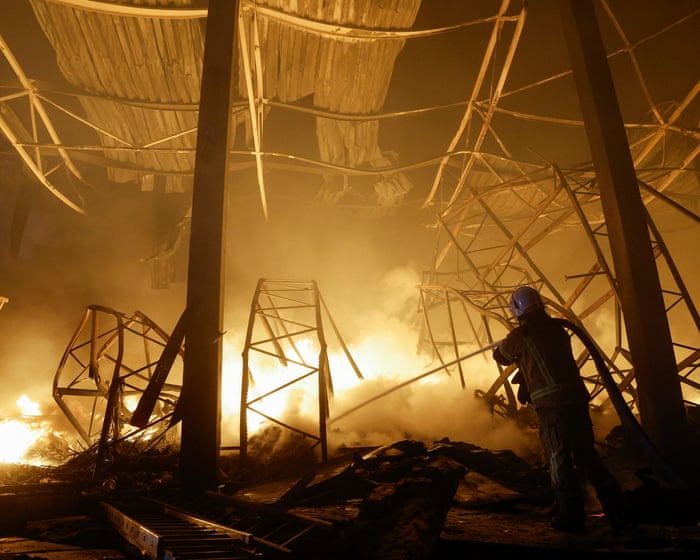
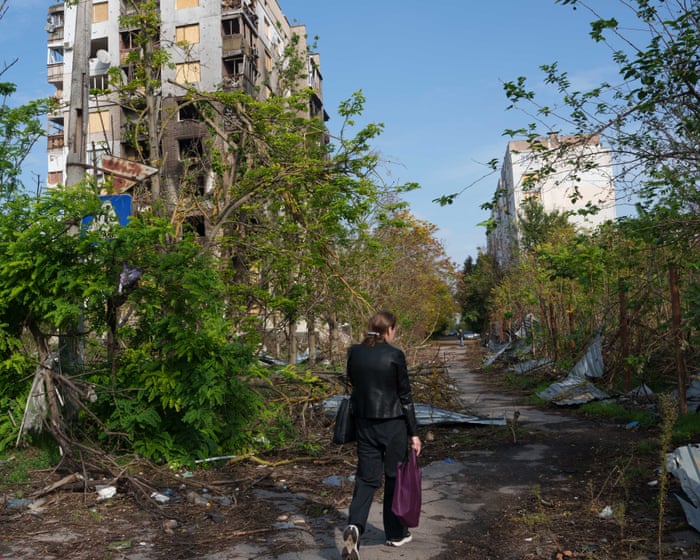
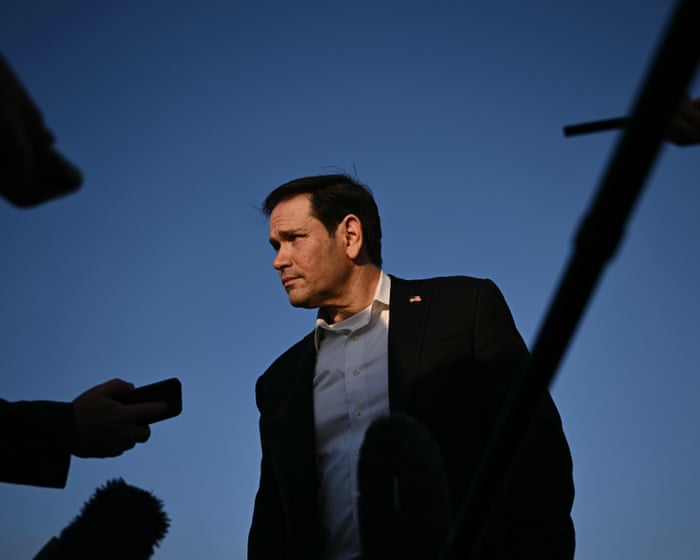
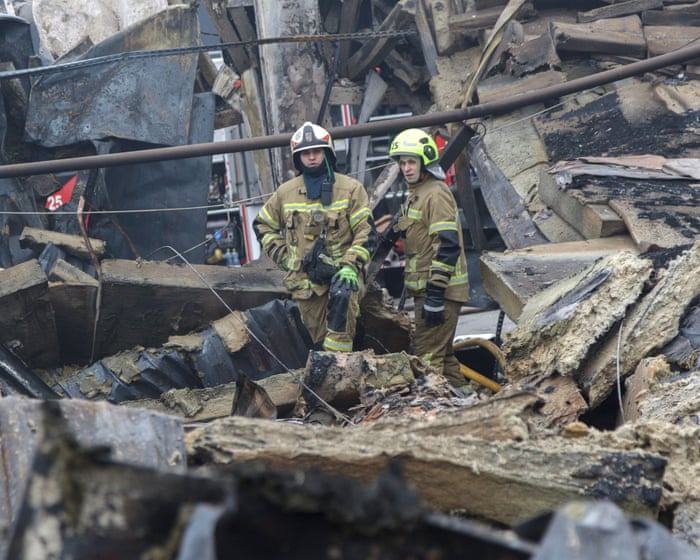
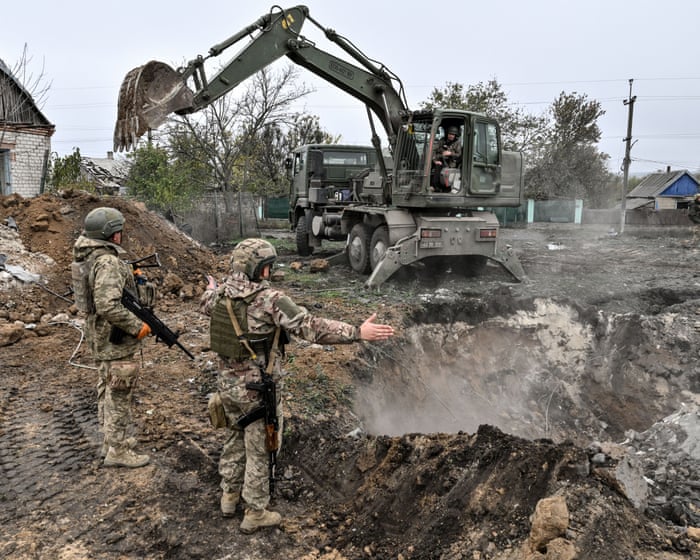
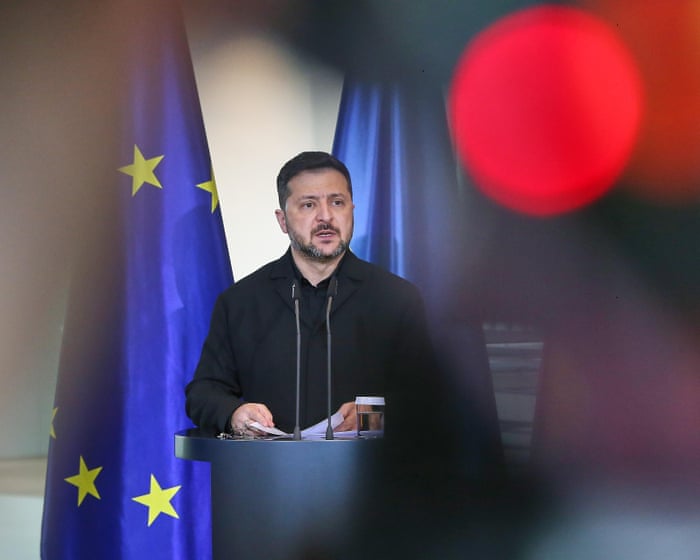
Ukrainian president says battlefield successes and mounting Russian losses add to negotiating leverage ahead of Abu Dhabi talks on Tuesday. What we know on day 1,721 Volodymyr Zelenskyy has said that battlefield successes were strengthening Kyiv’s position in negotiations, on the eve of new US-led trilateral talks on resolving the war. “Every task that is fully accomplished, every defensive operation that increases Ukraine’s strength and delivers results, strengthens Ukraine and, above all, strengthens us in negotiations,” the president said in his nightly video address on Monday. Zelenskyy said top Ukrainian military commander Mykhailo Drapatyi had presented a report that underscored heavy recent losses by Russian forces. He added that Ukraine’s long-range strikes on Russian targets, including oil industry sites, were also working. Russia’s battlefield losses have reached levels unprecedented in its modern history, according to data shared with the Guardian’s Pjotr Sauer. More than 400,000 Russians have been killed fighting in Ukraine over nearly five years of fighting, according to data leaked from the state statistics agency, Rosstat. The information, obtained by the Belarusian opposition-linked hacker group Cyber Partisans and the Ukrainian hacking collective Silent Crow, shows 412,576 death certificates explicitly linked to the war, either through official cause-of-death codes or written references to combat and military operations. US negotiators in Tuesday’s Abu Dhabi talks believe that Zelenskyy and Russian president Vladimir Putin may be willing to strike a compromise on the vital question of territory, with each ceding a little, an American official told Reuters. Under the proposed deal, Ukraine would get an end to the war, security guarantees and a roadmap to accession to the EU. In a 60 Minutes interview broadcast on Sunday, Donald Trump said Ukraine would have “a little bit different shape” under the settlement, but he didn’t elaborate. A senior Ukrainian official strongly denied that the government would consider any such concessions. Trump on Monday said that Washington was seeing a “very strong inclination” towards ending the war and that both sides were “tired of fighting.” However, US secretary of state Marco Rubio gave a more sober assessment of peace efforts. Rubio said the process still has “ways to go”, and that getting Europeans to the table with the Russians has still not happened. “It’s been difficult to get anything productive out of that,” Rubio told reporters a day before the talks. European powers, including France, Germany and the European Commission, will send officials to the talks, but Russia has made it clear it doesn’t want the Europeans to take part in negotiations. Instead, Ukrainian delegates will meet separately to brief their European allies on progress. “We are doing everything to ensure that Europe is a participant in the diplomatic process,” Rustem Umerov, the head of the Ukrainian delegation, said on Monday. EU foreign ministers pressed Rubio at a G7 meeting in Paris to ensure Europe is represented at the negotiations. German foreign minister Johann Wadephul said after talks with Rubio: “Europe belongs at this table. There can be no solution without Europe – only with Europe.” Russian foreign minister Sergei Lavrov said on Monday that Trump’s team had placed “collective security”, covering not just Russia and Ukraine but also a wider area, at the top of the agenda. Russian forces targeted four electrical substations in Kyiv, Dnipropetrovsk, Cherkasy and Vinnytsia regions, Russia’s defence ministry said Monday. The attacks are part of Russia’s campaign to deny Ukrainian civilians heating, light and running water during the approaching winter. Zelenskyy said Monday the EU had agreed to activate a special emergency mechanism that speeds up funding for power grid repairs. Russian forces also hit a warehouse in Odesa in south-western Ukraine containing food supplies for kindergartens and schools, killing three people, local officials said. A long-range Ukranian drone attack started a fire at the KINEF oil refinery, one of Russia’s largest, close to St. Petersburg, Leningrad governor Alexander Drozdenko said on Monday. Ukrainian forces also struck a plant near St. Petersburg, Russia’s second-largest city, that produces solid rocket propellant for Russia’s Iskander-M ballistic missiles, Ukraine’s general staff said. Continue reading...
Ukraine war briefing: battlefield gains bolstering Kyiv’s hand in US-led peace talks, Zelenskyy says
The Guardian – International · By Guardian staff and agencies
Published ·
Keep reading
Related stories