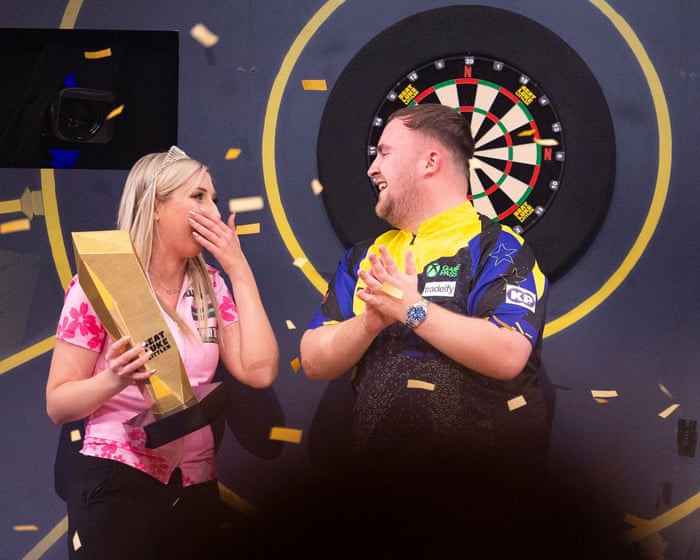
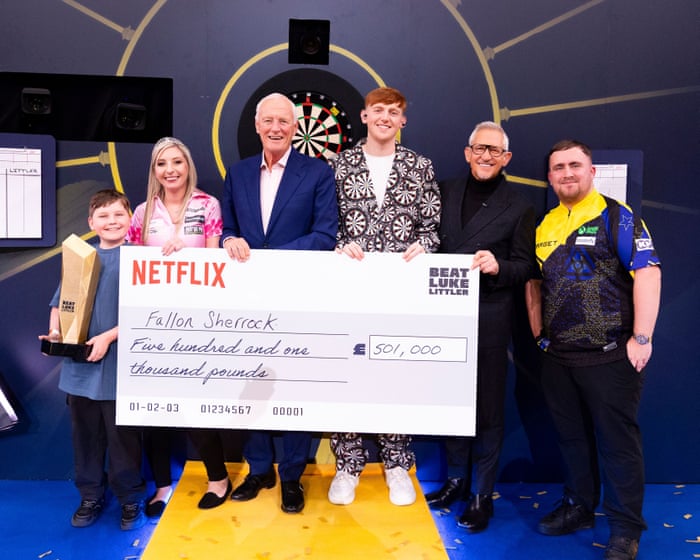
Decades of professionalism, investment and industrialised training methods have rendered the gulf between the sporting gods and mortals virtually unbridgeable “She walked in here a hairdresser from Milton Keynes – and walks out £501,000 richer!” Gary Lineker announced at the conclusion of Netflix’s Beat Luke Littler on Friday night. Which, while strictly accurate as a description of the winner Fallon Sherrock, arguably fell some way short of providing the full picture. “She walked in wearing socks – and walks out £501,000 richer!” “She walked in here a vertebrate mammal – and walks out £501,000 richer!” I mean, if we’re just reciting facts without context here. Because while Sherrock may still theoretically be qualified to cut hair, much of her past decade has been spent on darts: playing darts, practising darts, travelling to and from darts, promoting her darts career. Though she may never have held a Professional Darts Corporation tour card, she is – by any sane definition of the term – a professional darts player. Indeed, as a result of her historic run to the third round of the world championship at Alexandra Palace in late 2019, she may still be the second most famous darts player in the country, after Littler himself. Continue reading...
Sherrock’s synthetic success over Littler and why Netflix’s darts special felt so dissatisfying | Jonathan Liew
The Guardian – International · By Jonathan Liew
Published ·
Keep reading
Related stories