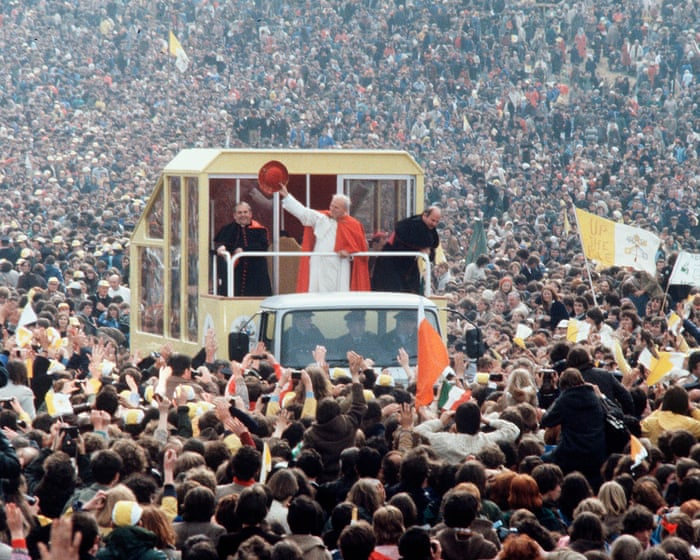
Was the failed assassination of the Polish pope a Soviet plot or simply the work of a deranged hitman? On the afternoon of Wednesday 13 May 1981, St Peter’s Square in Rome was packed with more than 10,000 pilgrims, excited to see the charismatic John Paul II, formerly Karol Wojtyla, archbishop of Kraków. Two and a half years earlier he had become the youngest cardinal to be elected pope in more than a century and the first non-Italian for 455 years. At 5.17pm a man pulled out a concealed pistol and raised it with both hands above the heads of the crowd. He took aim at the pope, only a few metres away, and fired several shots. Then, as he backed away from the shocked bystanders, he tripped and fell, where he lay pinned to the ground by a Franciscan nun until handcuffed by uniformed police. Meanwhile the pope had been hit by two bullets, one in the arm and the other in the abdomen. He was losing blood rapidly. He was rushed to hospital and underwent an operation, before beginning a slow recovery. The would-be assassin was soon revealed to be Mehmet Ali Ağca, a member of the rightwing Turkish paramilitary group known as the Grey Wolves. Continue reading...
Killing the Pope review – the truth behind the attempted murder of John Paul II
The Guardian – International · By Adam Sisman
Published ·
Keep reading
Related stories